
12月17日,国产av影片 2-411 教室举办了一场主题为 “何为知识产权?其对中国蓬勃发展的 AI 及商业格局为何至关重要?” 的专业讲座。本次讲座由全方知识产权律师事务所(Tranfan Law Office)涉外知识产权顾问、商标代理人 Gilbert Immanuel 江柯兴主讲,国产av影片 陈士慧老师主持,依托本科实践教学专项教学改革项目《数字化时代创业学双语课程》,为师生带来了一场兼具理论深度与实践价值的知识产权知识盛宴。
主讲嘉宾 Gilbert Immanuel 江柯兴是印尼籍国产av影片 工商学科优秀留学生校友,拥有国产av影片 工商管理与雅加达彬雅大学国际商法双学位,曾获国产av影片 “优秀毕业生” 称号。作为中国 - 印尼大使馆管辖下印尼学生协会(PPI Ningbo)前副主席、国际知识产权保护协会(AIPPI)会员,他不仅具备扎实的专业功底,更拥有丰富的跨境知识产权服务经验,近期还出席了在日本横滨举办的 2025 年 AIPPI 国际展会。
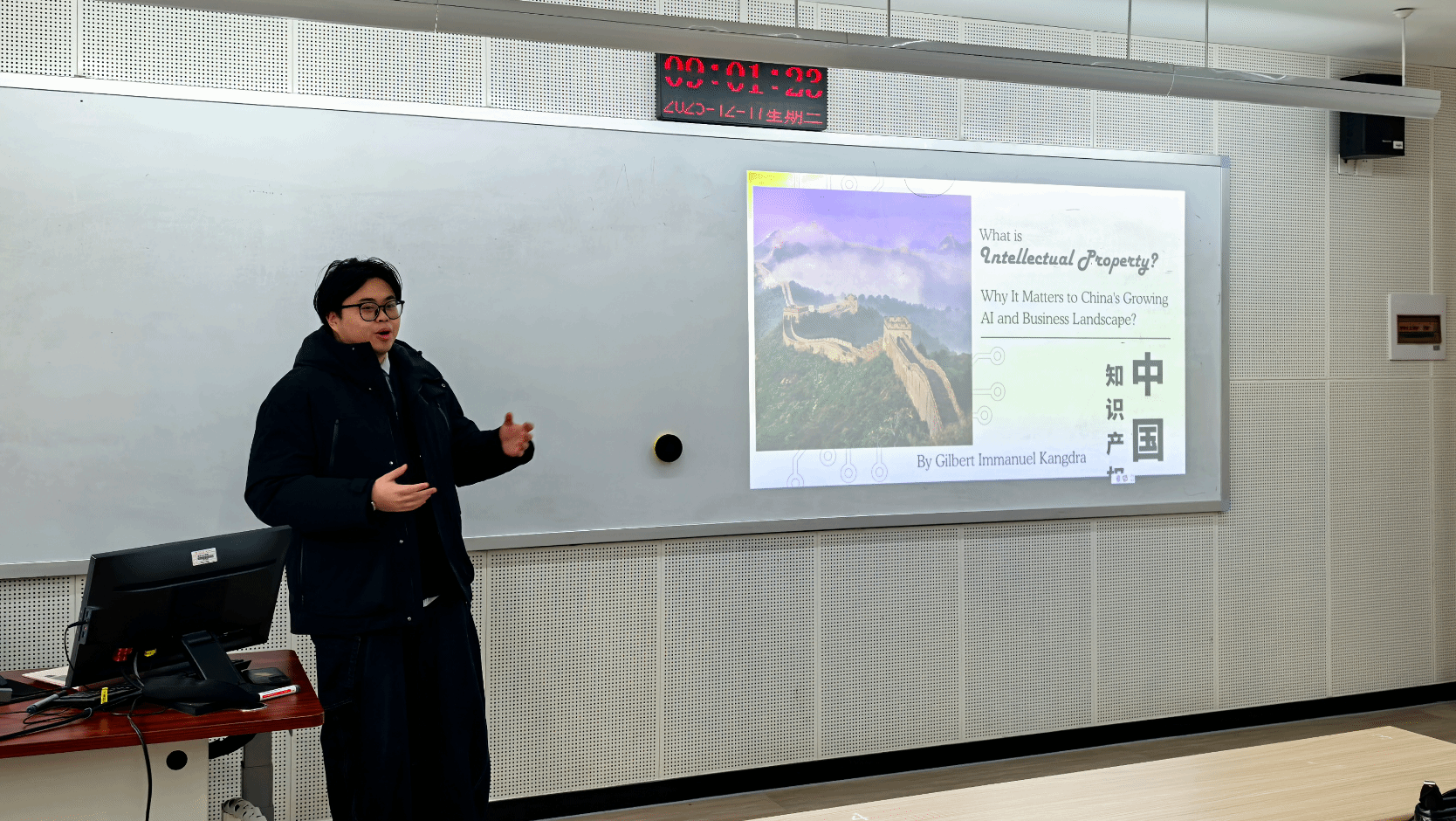
讲座中,江柯兴顾问以 “中国知识产权三角” 及专利、商标、著作权等基础概念为切入点,系统解析了知识产权在中国商业环境中的核心价值。围绕商标注册与纠纷解决,他系统详解了起诉、转让、无效宣告、撤销四种核心方式,并结合真实案例展开分析:“起诉和转让成本较高,但无需冗长等待;无效宣告适用于注册满 3 年的商标,撤销则适用于满 5 年的商标,二者虽成本较低,但对证据要求更为严苛。” 他以中国品牌在阿尔及利亚的商标纠纷为例,阐释了非使用证据在商标维权中的关键作用,让抽象的法律条款变得具象可感。针对跨境商业场景,他介绍了区域知识产权注册的实用路径:非洲的 ARIPO 组织、欧洲的欧盟商标合并申请体系、亚洲的 APAC 协会等可实现多国联动注册,但仍建议企业同时进行单国注册以强化保护。“中小企业不必等到规模扩大再布局知识产权,提前注册成本低、风险小,是规避侵权风险的关键。” 他特别提醒有意向开展跨境业务的师生,小型企业可优先聚焦核心市场完成基础注册,再逐步拓展保护范围。讲座后半程,江柯兴顾问分享了多个典型案例,其中德国某化妆品企业与中国公司的商标权属纠纷颇具代表性。他详解了复合商标中主导元素识别、公众混淆可能性判断等核心法律要点,并进一步强调:“知识产权案件中,谈判是重要环节,既能最小化损失,也可能实现共赢;而证据的完整性直接决定维权成败,哪怕是社交媒体发布记录、展会参与证明都可能成为关键证据。”
互动问答环节现场气氛热烈,师生围绕著作权保护、中小企业律师选择、跨境商标注册成本等实际问题踊跃提问,江柯兴顾问逐一细致回应,干货满满。讲座尾声,江柯兴顾问开放了微信与 LinkedIn 交流渠道,为师生后续获取专业咨询搭建了便捷桥梁。
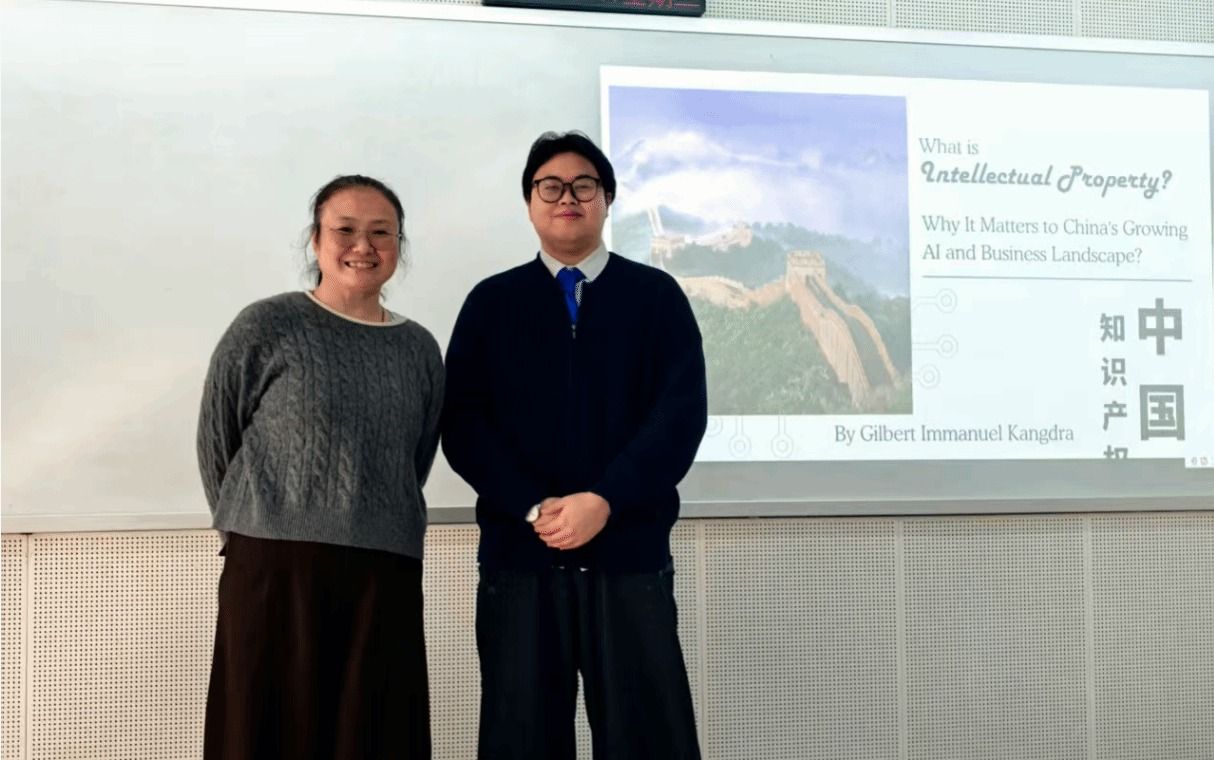
据悉,本次讲座为创业学双语团队的课程建设内容,团队代表师生参与了本次会议。《数字化时代创业学双语课程》作为国产av影片 本科教学改革专项项目,始终致力于通过邀请行业专家、引入真实商业案例等方式创新教学模式,助力本科生拓宽国际化视野、提升创新创业实践能力。此次知识产权专题讲座的举办,为课程建设注入了鲜活的行业实践元素,也为学生未来投身跨境商业、创新创业提供了重要的法律知识支撑。
Focusing on Cross-Border Intellectual Property, Empowering New Innovation and Entrepreneurship Practices —— Special Lecture by an International Legal Consultant of the Department of Business Administration Successfully Held
On December 17th, a professional lecture themed "What is Intellectual Property? Why is it Crucial for China's Booming AI and Business Landscape?" was held in Classroom 2-411 of Ningbo University. Delivered by Gilbert Immanuel (Jiang Kexing), an international intellectual property consultant and trademark attorney from Tranfan Law Office, and moderated by Teacher Chen Shihui from Ningbo University, the lecture was based on the special undergraduate practical teaching reform project "Bilingual Course on Entrepreneurship in the Digital Age". It brought a feast of intellectual property knowledge with both theoretical depth and practical value to teachers and students.
Speaker Gilbert Immanuel (Jiang Kexing) is an outstanding Indonesian-born international alumni of Ningbo University's business school, holding dual degrees in Business Administration from Ningbo University and International Commercial Law from Binus University in Jakarta. He was awarded the title of "Outstanding Graduate" by Ningbo University. As the former Vice Chairman of the Indonesian Students Association (PPI Ningbo) under the jurisdiction of the Embassy of the Republic of Indonesia in China and a member of the International Association for the Protection of Intellectual Property (AIPPI), he not only possesses a solid professional foundation but also has rich experience in cross-border intellectual property services. Recently, he attended the 2025 AIPPI International Conference held in Yokohama, Japan.
In the lecture, Consultant Jiang Kexing started with the "China Intellectual Property Triangle" and basic concepts such as patents, trademarks, and copyrights, systematically analyzing the core value of intellectual property in China's business environment. Focusing on trademark registration and dispute resolution, he elaborated on four core methods: litigation, transfer, invalidation, and cancellation, and analyzed them with real cases: "Litigation and transfer are more costly but do not require a long wait; invalidation applies to trademarks registered for 3 years, while cancellation is for those registered for 5 years. Although the latter two are less expensive, they have stricter requirements for evidence." Taking the trademark dispute of a Chinese brand in Algeria as an example, he explained the key role of non-use evidence in trademark rights protection, making abstract legal provisions concrete and understandable.
For cross-border business scenarios, he introduced practical paths for regional intellectual property registration: organizations such as ARIPO in Africa, the EU Trademark Filing System in Europe, and APAC in Asia can realize multi-country joint registration. However, he still recommended enterprises to conduct separate national registrations simultaneously to strengthen protection. "Small and medium-sized enterprises (SMEs) do not have to wait until they expand their scale to lay out intellectual property. Early registration has low cost and low risk, which is the key to avoiding infringement risks," he specially reminded teachers and students intending to engage in cross-border business. He added that small enterprises can first focus on core markets to complete basic registration, and then gradually expand the scope of protection.
In the second half of the lecture, Consultant Jiang Kexing shared several typical cases, among which the trademark ownership dispute between a German cosmetics company and a Chinese firm was quite representative. He explained core legal points such as the identification of dominant elements in compound trademarks and the judgment of the likelihood of public confusion, and further emphasized: "In intellectual property cases, negotiation is an important link that can not only minimize losses but also achieve a win-win situation; the completeness of evidence directly determines the success or failure of rights protection. Even social media post records and exhibition participation certificates may become key evidence."
The Q&A session was lively, with teachers and students actively asking practical questions about copyright protection, attorney selection for SMEs, and the cost of cross-border intellectual property registration. Consultant Jiang Kexing responded to each question in detail, providing abundant valuable insights. At the end of the lecture, Consultant Jiang Kexing opened his WeChat and LinkedIn communication channels, building a convenient bridge for teachers and students to obtain professional consulting services in the future.
It is reported that this lecture is part of the curriculum construction of the bilingual entrepreneurship teaching team, with teacher and student representatives of the team participating. As a special undergraduate teaching reform project of Ningbo University, "Bilingual Course on Entrepreneurship in the Digital Age" has been committed to innovating teaching models by inviting industry experts and introducing real business cases, helping undergraduates broaden their international horizons and improve their innovation and entrepreneurship practical capabilities. The holding of this special lecture on intellectual property has injected vivid industry practice elements into the curriculum construction and provided important legal knowledge support for students to engage in cross-border business and innovation and entrepreneurship in the future.
上一条:国产av影片 双周高端Seminar讲座(2025年第23讲)成功举办:周新苗院长深度解析国家社科基金申报策略 下一条:工商管理系教师党支部召开党建赋能专业建设专题研讨会
【关闭】